01 · Rigid forming
Square corners and tight wraps
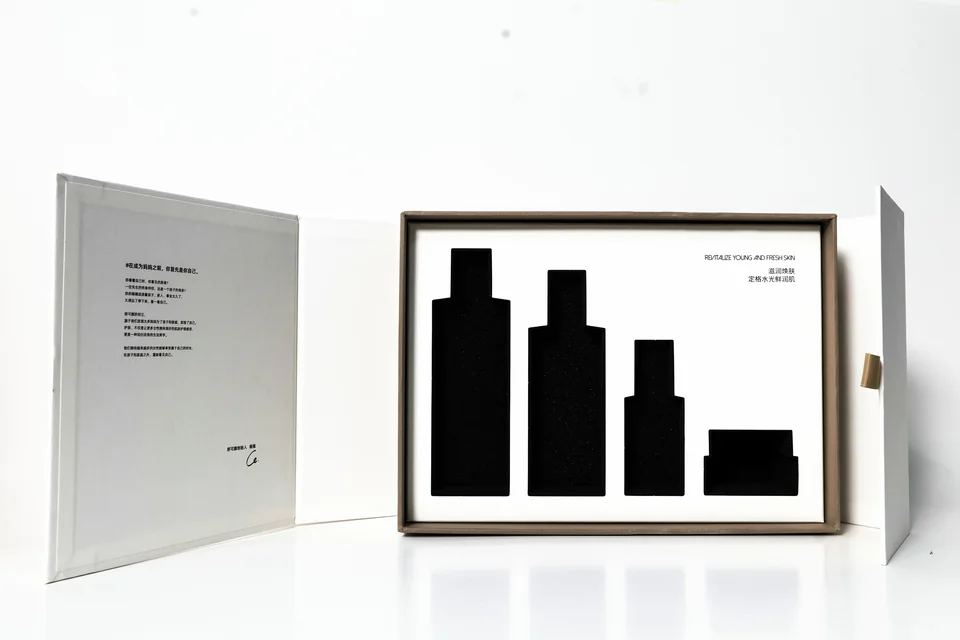
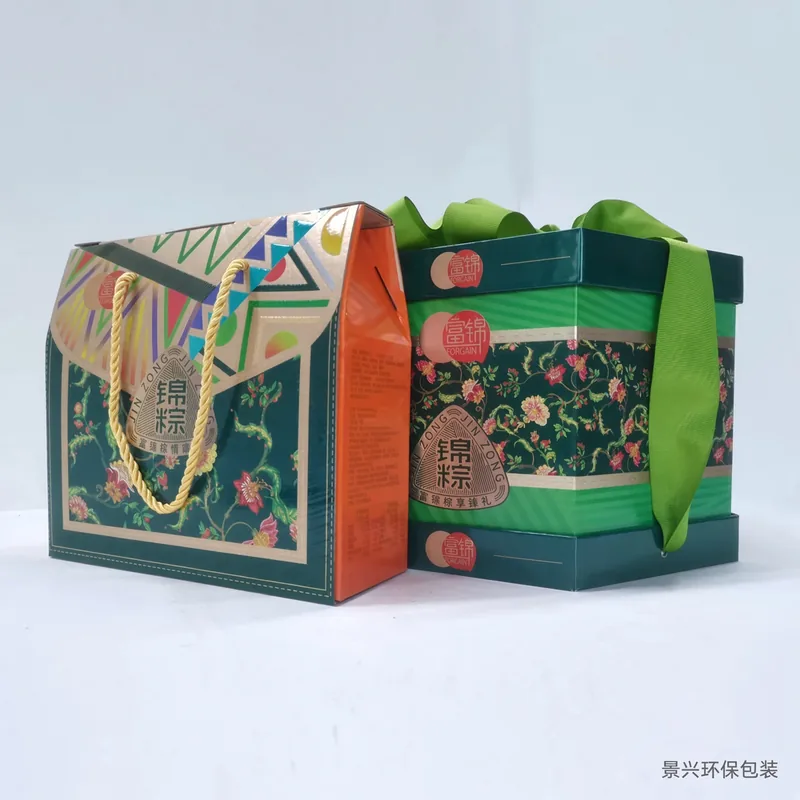
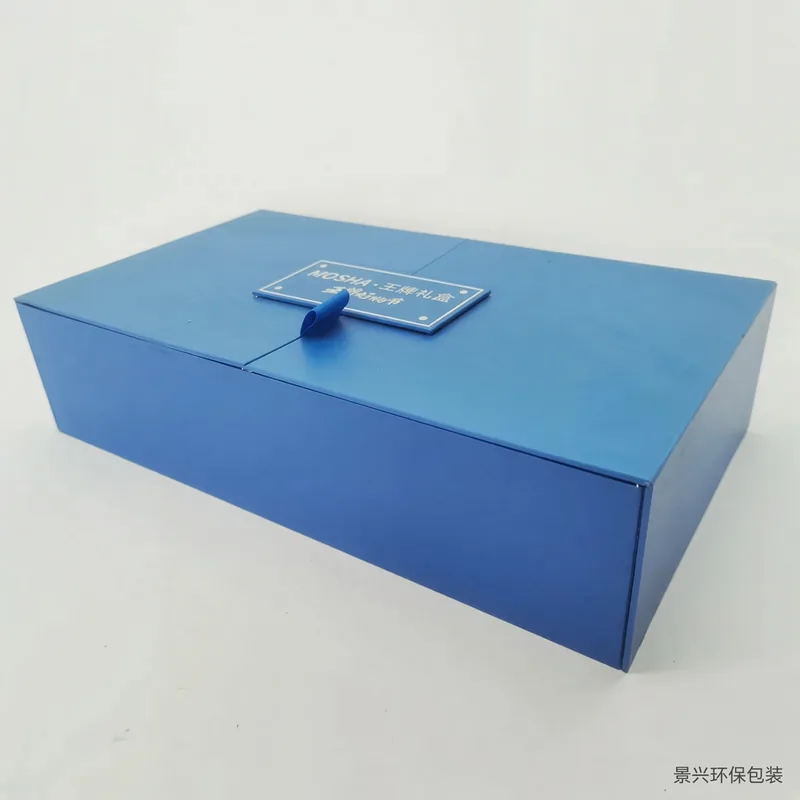
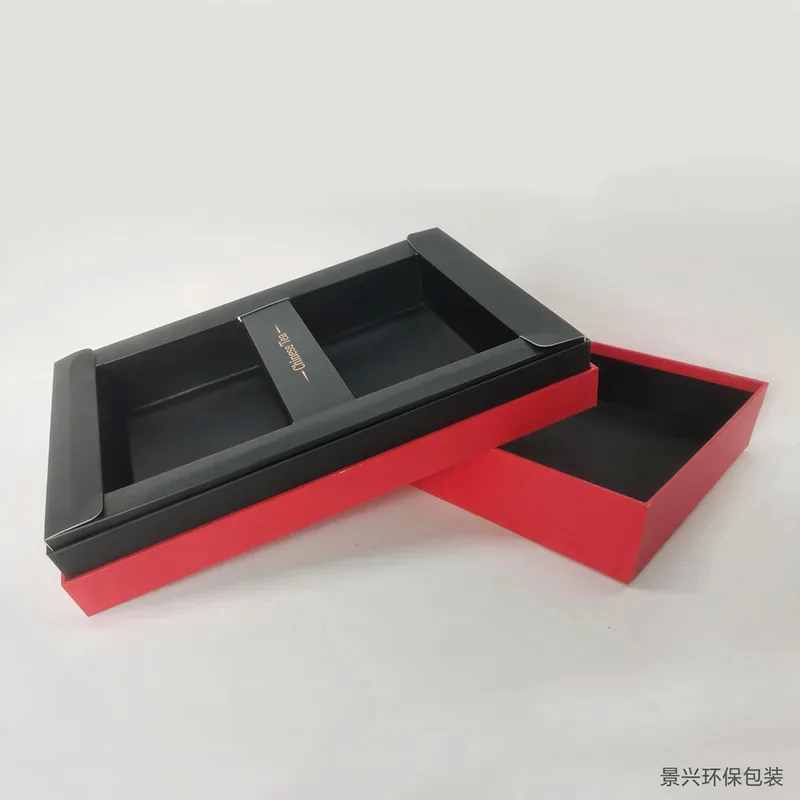
Our forming line wraps and presses lid-and-base boxes by machine, then our team fits the inserts by hand. Corners stay square and the wrap stays tight.
Why ours
01 · Rigid forming
Our forming line wraps and presses lid-and-base boxes by machine, then our team fits the inserts by hand. Corners stay square and the wrap stays tight.
02 · Sample first
We cut a plain white sample from your dieline on our sample table. You test the fit with your real product before we make a single plate.
03 · In-house finishing
Lamination, foil stamping, embossing and spot UV run in our print house on the same job as the print, so every finish lines up with the artwork.
Specification
Send us these details with your quantity and we price your job within 48 hours.
| Spec | What we run |
|---|---|
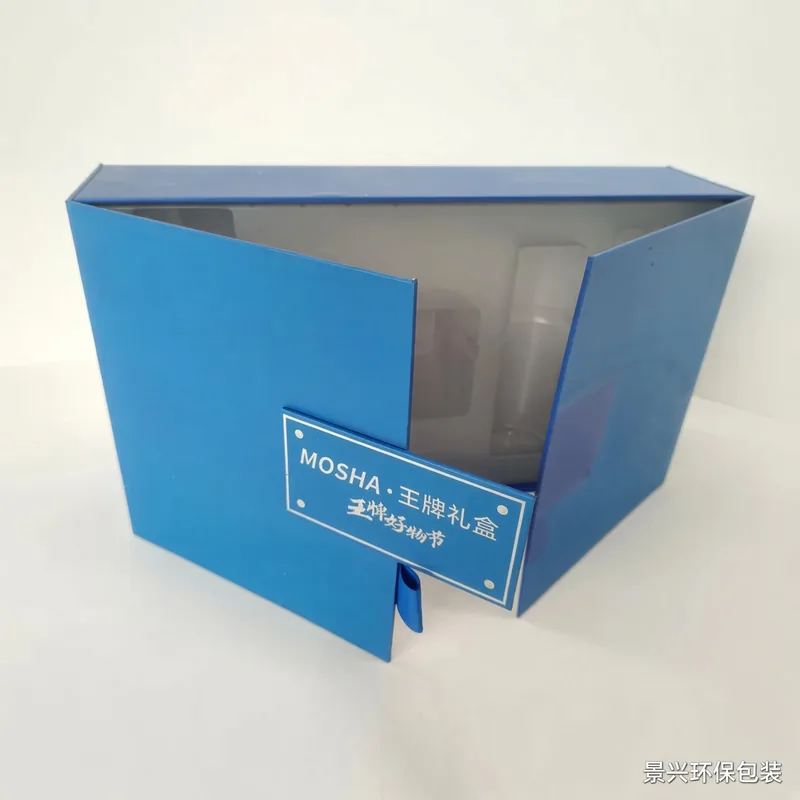
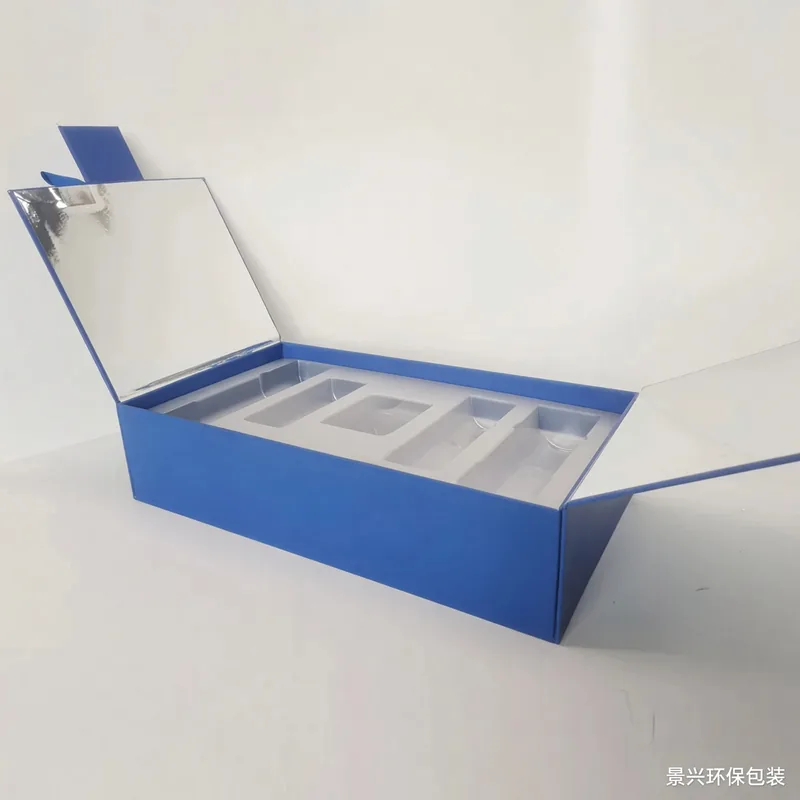
| Structure | Rigid body with two hinged doors and a fixed central tray |
| Tray | Flocked blister, EVA or folded paper, cut to each item |
| Hinges | Wrapped paper hinge, or ribbon stop to limit the opening angle |
| Board | 2.0-2.5 mm greyboard for the body and doors |
| Surface | Soft-touch lamination, hot foil, emboss, spot UV |
| Assembly | Hand-assembled on the gift-box line; inserts fitted before packing |
| Packing | Ships assembled; outer carton specified per drop test |
| MOQ | Quoted per structure, insert count and finish |
What you get
Questions
It is glued to the body floor before the doors are fitted. A loose tray is the most common failure on this structure, so it is a checked step, not an assumption.
Yes, and they usually do. Front and back faces are separate print layouts.
The doors and body are machine-wrapped where possible; the assembly and insert fitting are by hand on the gift-box line.
Related